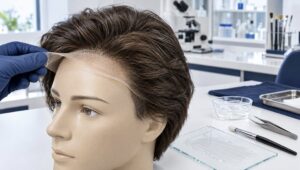

Is hair gel flammable? Kenra, CANTU and L.A. Looks gels aren’t classified as flammable on their safety data sheets. Aerosol hairspray and dry shampoo are flammable aerosols. Hair itself can burn too, so any product that leaves fuel on the hair matters near a flame.
This guide covers which hair products are flammable and why the pack may not tell you. It also shows how to check a product’s safety data sheet (SDS) and what a salon can do to cut the risk. It’s written for people who wear wigs and hair systems, and for the stylists and salons who fit them. More guides like this are on the Professional Hair Labs blog.
Hair product fire safety at a glance
- Human hair burns. NASA tests found it “marginally flammable in air”, with flame spreading upward and quickly over loose surface frizz.
- The aerosol hairspray and dry shampoos we checked are all classed as flammable aerosols, because of their propellant gases and alcohol.
- The gels, conditioner, shampoo and dye cream we checked aren’t classified as flammable.
- Developer and bleach powder are oxidisers, and their SDSs warn they “may intensify fire”.
- Finished cosmetics fall outside the main chemical classification and labelling laws in the EU, UK and US, so the pack may not tell you how flammable a product is. The SDS is where to check.
In this guide
- Is hair flammable?
- Is hair gel flammable?
- Which hair products are flammable?
- Hair product labels and the word “flammable”
- How to check if a hair product is flammable
- Heat tools and flammable products
- Hair system products and fire safety
- Fire safety checklist for salons
- What to do if hair catches fire
- FAQ
Is hair flammable?
Yes. NASA researchers found human hair “marginally flammable in air”, spreading upward but not downward. In oxygen-rich air (30% oxygen or more) it “burns extremely well” in any direction.
The same tests showed how hair burns. Flame spreads quickly over the loose outer “nap” or “frizz” first, then the bulk of the hair burns. Because the flame travels upward, a flame below the hair is the one to watch.
Why is hair so flammable?
It comes from how much hair is exposed to the air. In the NASA tests, flame spread quickly over the loose outer “frizz” before the rest of the hair burned. The Association for Science Education (ASE) made the same point for school labs: hair brushed out to expose a large surface area to the air is “inherently more flammable” than hair combed flat.
Is hair gel flammable?
Usually not, but check the product’s SDS, because formulas vary. Three gel SDSs we checked, from Kenra, CANTU and L.A. Looks, didn’t classify the gel as flammable. Kenra’s lists ethanol below 5%. L.A. Looks gives a flash point above 200°F (93°C), lists the gel as a Class IIIB combustible liquid and calls the fire hazard “negligible”.
There’s one catch. The ASE noted that glycerol-based gels aren’t particularly flammable themselves, but on hair “they may cause it to burn rather than just singe”. Treat gelled hair as hair that can burn, and keep it away from open flames.
Which hair products are flammable?
In the SDSs we checked, the flammable ones were the aerosols and one silicone-based serum. The gels, creams and washes weren’t classified as flammable. The table shows what the SDSs we checked say for each product type. Your product may differ, so treat it as a guide and check its own SDS.
| Product type | What the SDSs we checked say | What drives it | What to do |
|---|---|---|---|
| Hairspray (aerosol) | “Extremely flammable aerosol” (Category 1); flash point 10°C (50°F) | Alcohol and propellant gases such as butane and propane | Spray away from flames and hot tools; let it dry before using heat |
| Dry shampoo (aerosol) | “Flammable aerosol” | Propellant gases and alcohol | As hairspray; never spray near a flame or cigarette |
| Hair gel | Not classified as flammable (three SDSs) | One lists ethanol below 5% | Keep gelled hair away from open flames |
| Silicone hair serum or oil | One serum labelled a flammable liquid, flash point 73°C (163°F) | Volatile silicones such as cyclopentasiloxane | Check the SDS; keep away from flames |
| Plant oil (argan) | Flash point above 150°C (302°F) | The oil itself | Keep away from flames; see the towel warning below |
| Wax and paste | Not classified (one liquid wax, one paste) | The liquid wax is 59.2% water | Low risk, but check the SDS |
| Hair grease and pomade | No finished-product SDS found; petrolatum, a common base, has a flash point of 301.7°C (575°F) | Petrolatum | Check the product’s own SDS |
| Conditioner | “Non-flammable”; flash point above 100°C (212°F) | Cream emulsion | Low risk |
| Shampoo | Flash point above 93.3°C (200°F) | Not stated | Low risk |
| Hair dye cream | “Non-flammable”; not an oxidiser | Not stated | Low risk on its own |
| Developer (hydrogen peroxide) | “May intensify fire; oxidiser” | Hydrogen peroxide | Store and mix as the SDS directs |
| Powder lightener (bleach) | “May intensify fire; oxidiser” | Persulphates | Store and mix as the SDS directs |
Is hairspray flammable?
Aerosol hairspray is. A Kenra aerosol hairspray SDS classes it as an “Extremely flammable aerosol” with a flash point of 10°C (50°F). Alcohol makes up 30% to 50% of the can, along with propellant gases. A flash point of 10°C (50°F) is below normal room temperature.
The SDS says to keep it “away from heat, sparks, open flames, hot surfaces” and not to “spray on an open flame or other ignition source”.
Is dry shampoo flammable?
Yes, the aerosol versions. Batiste and Kenra dry shampoo SDSs both class their products as flammable aerosols. In the Batiste SDS, butane makes up 30% to 60% of the contents, and the SDS says not to spray on an open flame or other ignition source.
Is hair conditioner flammable?
Not on the SDSs we checked. A professional conditioner SDS calls the product “non-flammable”, with a flash point above 100°C (212°F). Shampoo is similar: a shampoo SDS gives a flash point above 93.3°C (200°F).
Is hair oil flammable?
It depends what’s in it. A pure argan oil SDS gives a flash point above 150°C (302°F), so it won’t catch easily. Serums built on volatile silicones are different, and formulas vary a lot. Kenra Platinum Luxe Oil is labelled a flammable liquid on its SDS, with a flash point of 73°C (163°F). Cyclopentasiloxane, a common serum ingredient, is a “combustible liquid” with a flash point of 76°C (169°F) on its own SDS. Even an oil that isn’t classified can need care: the ghd Styling Oil SDS notes it “may form flammable/explosive vapour-air mixture” during use.
Is hair wax, pomade or grease flammable?
The liquid wax and styling paste SDSs we checked weren’t classified as hazardous. We didn’t find an SDS for a finished grease or pomade. Petrolatum, a common base for both, has a flash point of 301.7°C (575°F) on its own SDS. A high flash point doesn’t make hair fireproof, so keep product-coated hair away from open flames anyway.
Is hair dye flammable?
The dye cream isn’t, but the developer and bleach powder are oxidisers. A Clairol permanent colour SDS lists the colour as “non-flammable” and not an oxidiser. The developer and powder lightener SDSs we checked both warn that the product “may intensify fire”. The lightener SDS also says the powder can form explosive dust-air mixtures. Store and mix them exactly as their SDSs direct.
Hair product labels and the word “flammable”
Cosmetics have their own rules, so the pack isn’t a reliable guide to flammability. In the EU and UK, CLP, the chemical classification and labelling law, doesn’t apply to cosmetic products in the finished state intended for the final user. In the US, the Federal Hazardous Substances Act excludes cosmetics covered by the Federal Food, Drug, and Cosmetic Act. US aerosol cosmetics need a set warning about pressure, heat and eyes, and that wording doesn’t include the word “flammable”.
Cosmetic labelling rules don’t set a standard flammability warning, so you can’t rely on the pack alone. You can see the exemption on real SDSs: one conditioner SDS states that “cosmetic products are exempt from classification” under CLP. The safety data sheet is the reliable source. Brands such as Kenra publish theirs online, and salons can ask their supplier for any they don’t have.
How to check if a hair product is flammable
- Get the SDS. Look on the brand’s website, or ask your supplier or distributor.
- Read section 2, “Hazards identification”. Look for a flame or flame-over-circle pictogram and phrases such as “Extremely flammable aerosol”, “Flammable aerosol”, “Flammable liquid”, “Combustible liquid” or “May intensify fire”.
- Check the flash point in section 9. The lower it is, the more easily the vapour catches. Under US workplace rules, any liquid with a flash point up to 93°C (199.4°F) is a flammable liquid. Category 1 and 2, the most flammable, have a flash point below 23°C (73.4°F).
- Read section 7, “Handling and storage”. It gives storage temperatures and the things to store the product away from.
- Follow the pack. If the label has its own flame warning, follow it as well.
Heat tools and flammable products
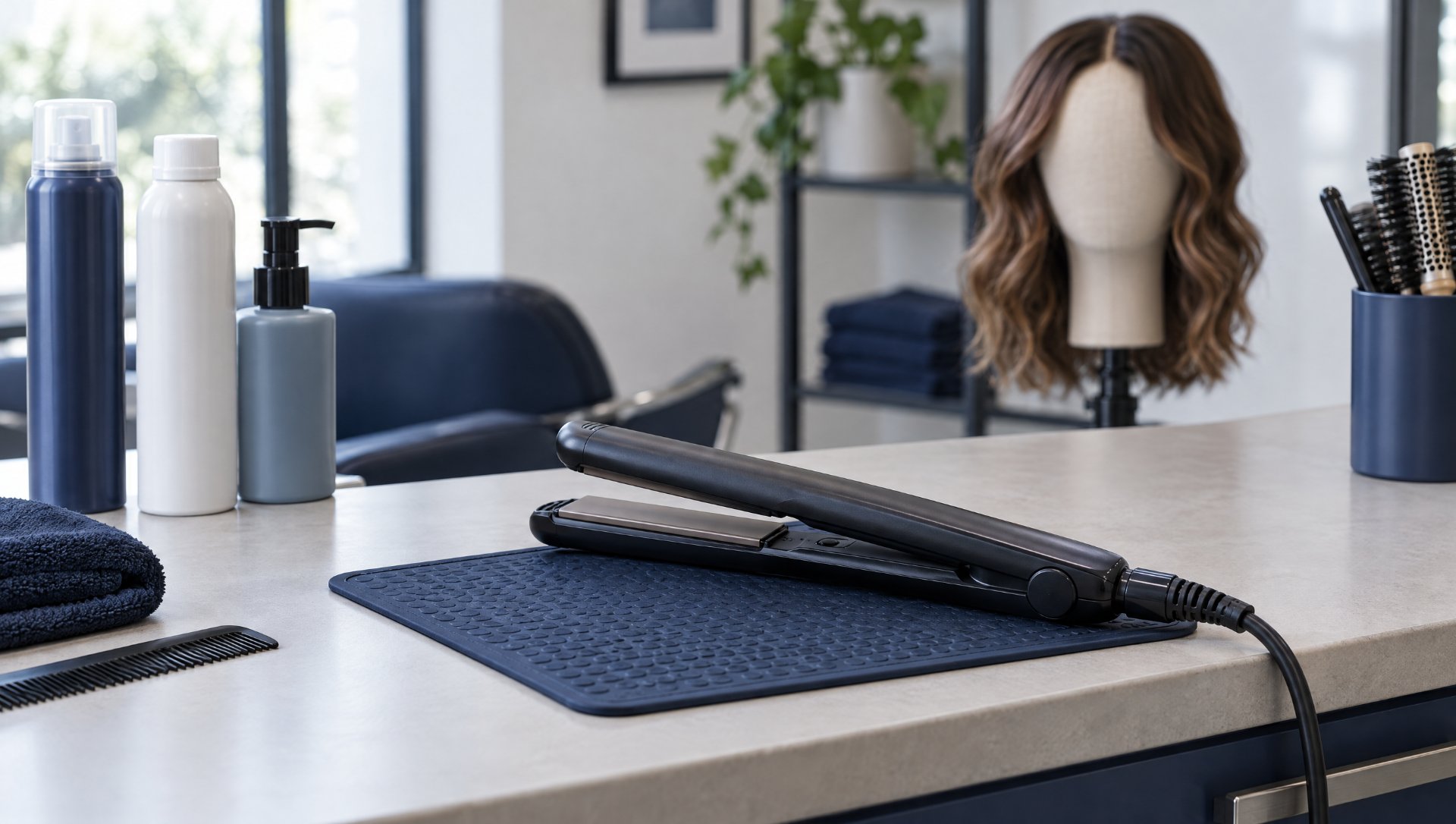
Flat irons and curling tongs are heat sources, and the hairspray and dry shampoo SDSs we checked list “hot surfaces” alongside sparks and open flames as things to avoid. Professional flat irons run hot. One maker’s guide recommends 250°F to 450°F (121°C to 232°C) for human hair, depending on texture.
- Let sprays and serums dry fully before using a hot tool.
- Don’t spray an aerosol at a hot tool, or near a candle, gas hob or cigarette.
- Rest hot tools on a heat mat, away from aerosol cans.
- Keep aerosol cans out of hot places. The Batiste SDS says not to expose the can to temperatures above 50°C (122°F).
Synthetic wigs need extra care. CancerCare advises keeping synthetic wigs away from ovens, grills and open flames. Our synthetic wig care guide covers which synthetic fibres can take heat, and how much.
Hair system products and fire safety
These products from our range carry a flame warning on their product pages:
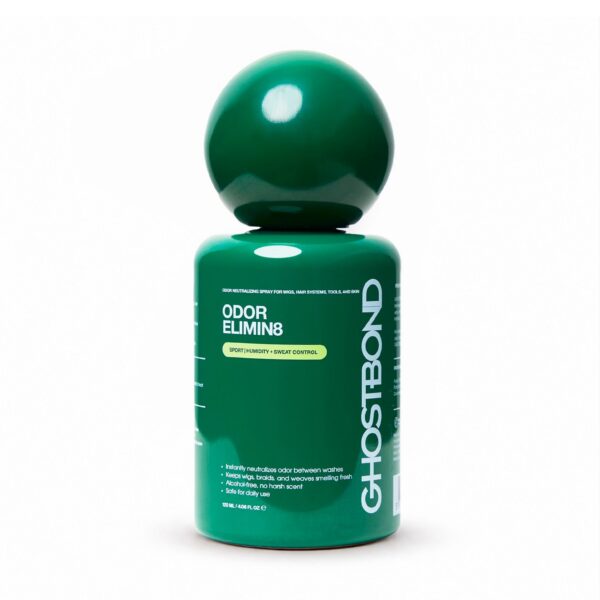
- GHOSTBOND Odor Elimin8 (formerly Elimin8) is marked flammable. Mist it lightly onto a dry unit, let it air dry completely, and keep it away from heat, sparks and open flame.
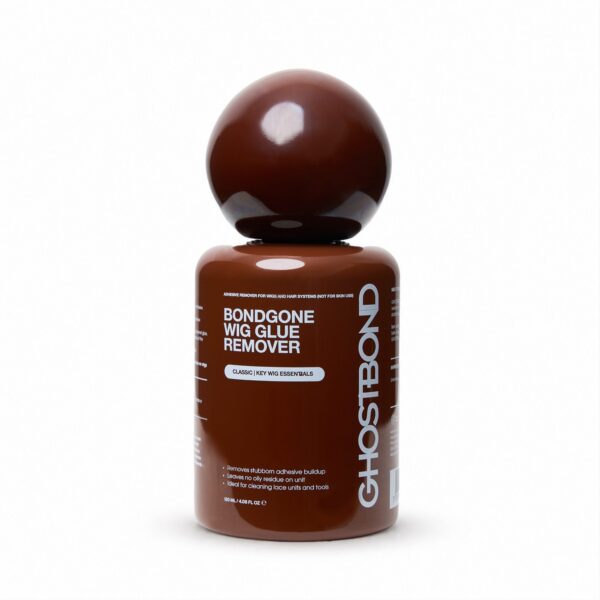
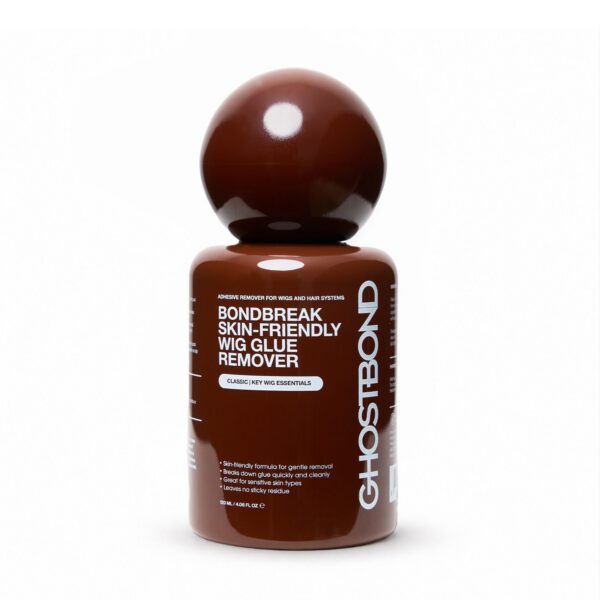
- GHOSTBOND BondGone Glue Remover (formerly GhostBuster Citrus Remover), which cleans adhesive off the unit and isn’t for the skin, and GHOSTBOND BondBreak Skin Friendly Glue Remover (formerly UltraSafe Adhesive Remover), for taking the bond down, both say: “Keep away from open flames or sources of ignition.”
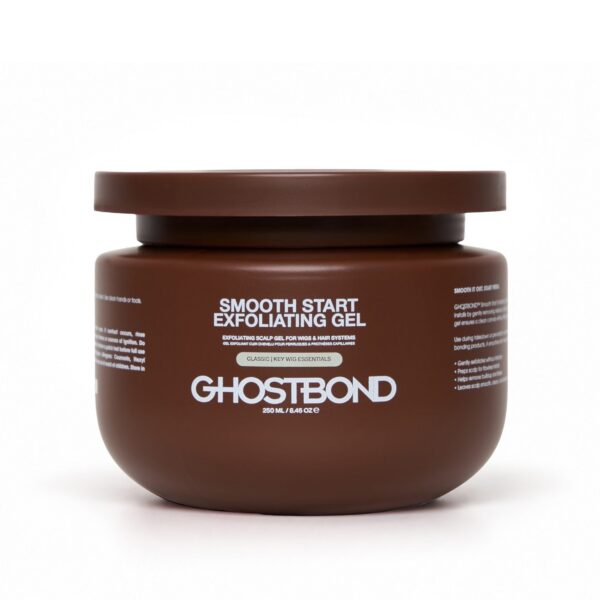
- GHOSTBOND Smooth Start Exfoliating Gel (formerly Remove All Exfoliating Gel) has the same warning.
Use these removers well away from open flames and cigarettes, as their warnings say. To stock the full range, browse the GHOSTBOND catalogue.
Fire safety checklist for salons
- Keep an SDS file for every product on your shelves and in the back room.
- Store aerosols away from heat and sun. Don’t keep them in a hot window. The HSE’s example risk assessment for a salon says no aerosols or flammable products should be displayed in the window.
- Spray away from hot tools and flames. Let products dry before heat styling.
- No smoking or naked flames near styling stations, and none near clients with fresh spray, gel or serum in their hair.
- Watch synthetic capes and gowns. In a 2024 study, hairspray residue made polyester and nylon fabric burn hotter and longer. It didn’t change how cotton, silk or wool burned.
- Wash towels hot, and let the dryer finish its cooling cycle. Towels with oil residue can self-heat and catch fire after drying. London Fire Brigade reported a fire like this at a beauty salon in 2016. Cambridgeshire Fire and Rescue advises washing hot enough to remove the oils and airing laundry before folding.
- Store developer and lightener as their SDSs direct. They’re oxidisers that “may intensify fire”, and lightener powder can form explosive dust-air mixtures.
- Tell clients which products in their aftercare kit carry a flame warning.
What to do if hair catches fire
Fire services advise that if your clothes catch fire, you stop, drop and roll to smother the flames, and cover your face with your hands. Do the same if your hair catches fire.
Then cool any burn under cool running water for 20 minutes, as soon as you can and within 3 hours. Don’t use ice, creams, oils or butter. Lay cling film over the burn, but don’t wrap it. Call 999 or go to A&E for large or deep burns, or burns to the face. If you’re unsure what to do, the NHS advises calling 111.
Products in this guide
FAQ
Is hair gel flammable?
Kenra, CANTU and L.A. Looks gels aren’t classified as flammable on their safety data sheets. Formulas vary, so check the SDS for your product. Gelled hair can still burn, so keep it away from open flames.
Is hair flammable?
Yes. NASA tests found human hair marginally flammable in normal air, with flame spreading upward and quickly over loose, frizzy hair. In oxygen-rich air it burns extremely well.
Is hair conditioner flammable?
Not on the SDS we checked. That professional conditioner SDS calls the product non-flammable, with a flash point above 100°C (212°F).
Is hair dye flammable?
The dye cream isn’t classified as flammable. The developer and bleach powder used with it are oxidisers, which “may intensify fire”, so store and mix them as their SDSs direct.
Is hair oil flammable?
The pure argan oil SDS we checked gives a flash point above 150°C (302°F). Serums based on volatile silicones can be classed as flammable or combustible liquids, so check the SDS.
Is hair wax flammable?
The wax and paste SDSs we checked weren’t classified as hazardous. Keep product-coated hair away from open flames anyway.
Is hair grease or pomade flammable?
We didn’t find an SDS for a finished grease or pomade. Petrolatum, a common base, has a flash point of 301.7°C (575°F) on its own SDS. Still, don’t let any product-coated hair near an open flame.
Is hairspray flammable?
Aerosol hairspray is. The Kenra aerosol SDS we checked classes it as extremely flammable, with a flash point of 10°C (50°F). Spray away from flames and hot tools, and let it dry before styling with heat.
Are there non-flammable hair products?
Yes. The conditioner, shampoo and three gels we checked aren’t classified as flammable. Read section 2 of the product’s safety data sheet to check yours.
Sources and method
- Olson, S.L., Griffin, D.W., Urban, D.L., Ruff, G.A. (NASA Glenn Research Center) and Smith, E.A. (Cornell University), “Flammability of Human Hair in Exploration Atmospheres”, SAE Technical Paper 2009-01-2512, 2009: sae.org
- Association for Science Education, “Hazards of hairstyles”, Education in Science, April 1988, reviewed May 2016: ase.org.uk
- US OSHA, Hazard Communication Standard, 29 CFR 1910.1200 Appendix B (flammable liquids and aerosols): osha.gov
- Regulation (EC) No 1272/2008 (CLP), Article 1(5)(c): EUR-Lex and the UK retained version at legislation.gov.uk
- Federal Hazardous Substances Act, 15 U.S.C. 1261: govinfo.gov
- US FDA, 21 CFR 740.11 (warnings for cosmetics in self-pressurised containers): ecfr.gov
- Safety data sheets checked for this guide (each is the maker’s or supplier’s own SDS):
- Kenra Volume Spray 25 (Henkel, 2024)
- Batiste Dry Shampoo (Church & Dwight, 2024)
- Kenra Volume Dry Shampoo (2015)
- Kenra Styling Gel (2018)
- CANTU Styling Gels (2023)
- L.A. Looks Sport Gel (Henkel, 2008)
- Kenra Platinum Luxe Oil (2020)
- decamethylcyclopentasiloxane (Gelest, 2014)
- argan oil (EarthYard, 2018)
- petrolatum (Ergon, 2018)
- KMS Hair Play Liquid Wax (2016)
- Kenra Clear Paste (2018)
- Equave conditioner (Beautyge, 2015)
- ghd Styling Oil (Mibelle, 2022)
- Dial Hair & Body Shampoo (Henkel, 2015)
- Clairol permanent haircolour (P&G, 2002)
- Punky Colour Cream Developer 40 (2019)
- Blonde Voyage Powder Lightener (2021)
- FHI Heat, “The ultimate flat iron temperature guide”: fhiheat.com
- Reischl, Ballinger, Noren, Meister and Bozeman, “Fabric Flammability Changes Due to Hair Spray Exposure”, Journal of Fiber Bioengineering and Informatics 17(4), December 2024
- CancerCare, “311 Synthetic Wig Care and Resources”: cancercare.org
- HSE example risk assessment for a hairdressing salon (via Lancaster City Council)
- London Fire Brigade, towels self-heating in a tumble dryer at a gym and beauty salon, July 2016: london-fire.gov.uk
- Cambridgeshire Fire and Rescue Service advice to salons and spas on tumble dryer fires (reported by the Wisbech Standard)
- Cheshire Fire and Rescue Service, Burn awareness: cheshirefire.gov.uk
- National Fire Chiefs Council, burn injury advice, May 2024
- NHS, Burns and scalds: nhs.uk
- Professional Hair Labs product pages for Odor Elimin8, BondGone, BondBreak and Smooth Start (live site, 1 October 2026)
About this guide
Written by Professional Hair Labs, the manufacturer behind GHOSTBOND. Last reviewed on 1 October 2026. This guide is general safety information. Always follow the label and safety data sheet for each product.